Orchard netting quote checklist for apples, cherries and fruit blocks
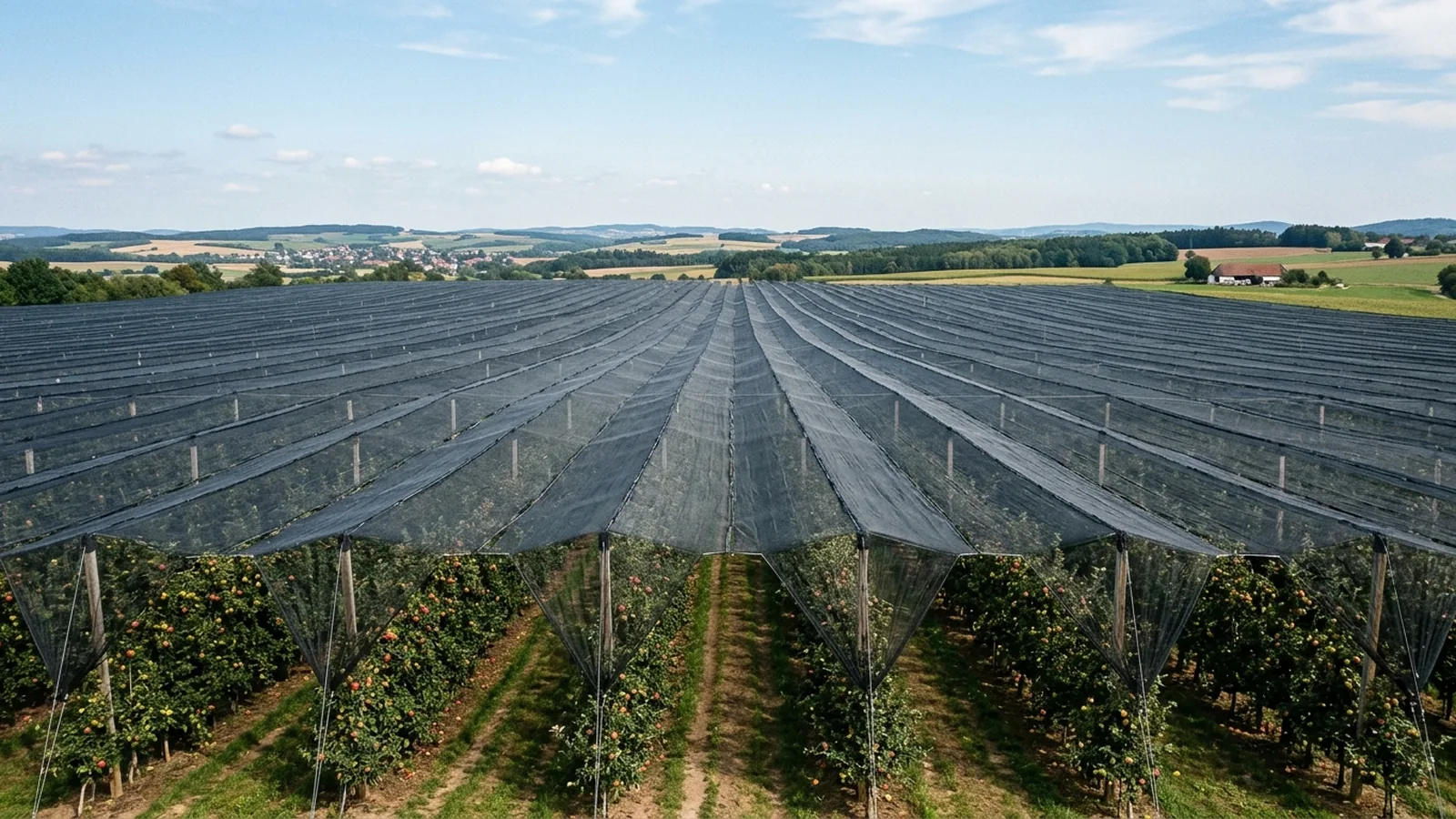
An orchard netting quote is only as good as the questions behind it.
“We need netting for 4 hectares” is a beginning, not a specification. To get comparable quotes, you need enough detail for suppliers to quote the same problem.
In short
An orchard netting RFQ should remove ambiguity, not be long for its own sake. The minimum standard is crop, the risk you are stopping (hail, birds, insects, heat, wind), block dimensions, support system, target material, roll format and delivery context. Name the protection goal first: these product families look alike but do not do the same job.
Step 1: define the protection goal
Start by naming the main risk:
- hail
- birds
- insects
- sunburn and heat
- wind
- mixed protection
This matters because the product families overlap in appearance but not always in function. A net that is good for bird exclusion may be too open for insects. A shade net may reduce heat stress but not stop hail.
Step 2: describe the block
For each orchard block, provide:
- crop and variety if relevant
- block length and width
- number of rows
- row spacing
- tree spacing
- canopy height
- slope or irregular geometry
- access constraints
If you have a sketch, even a rough one, attach it. A simple sketch can save three emails.
Step 3: describe the support system
For hail or full-cover systems, include:
- post height
- post spacing
- cable layout
- anchor layout
- flat or pitched structure
- attachment method
- whether the net opens or remains fixed
If the structure is not built yet, say so. The quote can then separate netting supply from structural assumptions.
Step 4: specify the product expectations
Ask for:
- material, such as UV-treated HDPE
- color
- GSM or weight if known
- mesh/opening if relevant
- roll width
- roll length
- edge finish
- packaging
- expected outdoor life
For insect-related needs, the Mesh Size Visualizer helps turn pest pressure into a starting aperture conversation.
Step 5: ask commercial questions clearly
Include:
- target quantity
- delivery country and port if relevant
- Incoterm preference
- whether you need samples first
- required documentation
- target delivery date
- whether you are comparing multiple suppliers
This is where many buyers accidentally create confusion. “Delivered price” can mean very different things. If unsure, choose “not sure” in the Quote Request rather than guessing the Incoterm.
Buyer takeaway
An orchard netting RFQ does not need to be long for the sake of being long, it needs to remove ambiguity, and those two goals produce very different documents once someone starts writing. The minimum that does the job is crop, risk, block dimensions, support system, target material, roll format and delivery context, which is enough to make the first quote meaningful and, more usefully, enough to make the second one comparable to it.
Frequently asked questions
What is the minimum an orchard netting RFQ must contain?
Crop, the risk you are stopping, block dimensions, support system, target material, roll format and delivery context. That is enough to make the first quote meaningful, and to make the second quote comparable.
Why name the protection goal before the product?
Because the product families overlap in appearance but not always in function. A net that is good for bird exclusion may be too open for insects, and a shade net may reduce heat stress without stopping hail.
What should I send about the orchard block itself?
Crop and variety if relevant, block length and width, number of rows, row spacing, tree spacing, canopy height, slope or irregular geometry, and access constraints. Even a rough sketch can save three emails.
What if the support structure is not built yet?
Say so. The quote can then separate netting supply from structural assumptions, instead of burying those assumptions inside a price that looks precise.