Leno mesh bag size guide for onions, potatoes and citrus
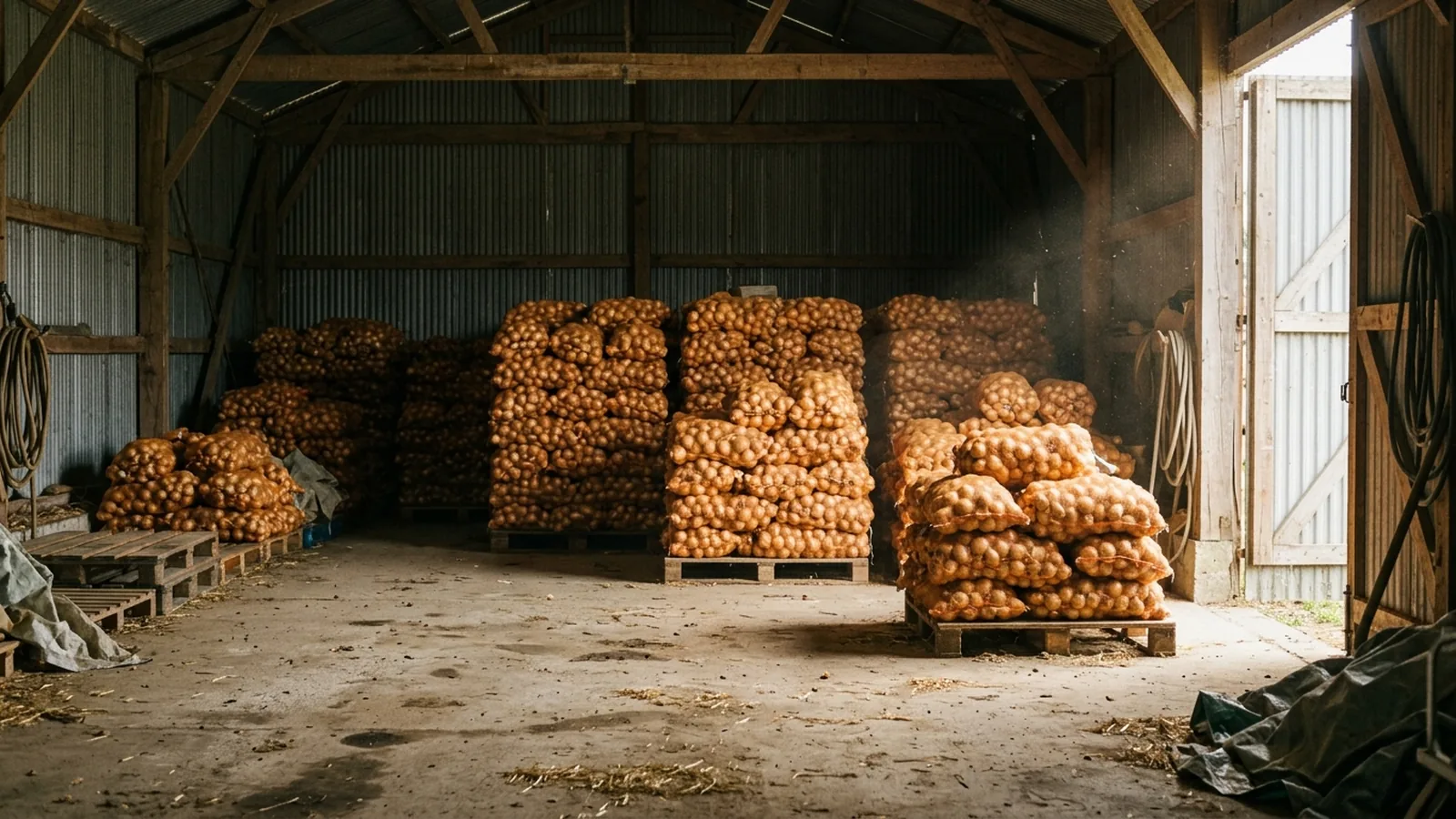
The right leno mesh bag size is only partly a dimension, and mostly a handling decision: a bag that reads perfectly well on a spec sheet can be awkward the moment it is filled, stacked, labeled or carried across a yard, and none of that awkwardness appears in the two numbers that describe it.
A bag that looks fine on a spec sheet can be awkward when filled, stacked, labeled or carried. For produce packaging, the useful question is: what fill weight and handling method should this bag support?
In short
Choose leno mesh bag size from fill weight and handling, not from dimensions alone. A size such as 50 x 80 cm does not describe a bag: material, mesh construction, fabric weight, closure, color, print and packing all change how it performs. Retail and wholesale need different bags for the same crop.
Start with fill weight
Most bag conversations should begin with target fill weight:
- small retail packs
- medium consumer packs
- wholesale sacks
- bulkier produce handling
Onions, potatoes and citrus do not behave the same in a bag. Shape, abrasion, ventilation needs and stacking all matter.
The USDA commercial storage handbook treats produce handling and storage as one system, with temperature, humidity and ventilation all acting on the same crop at the same time, and packaging sits inside that system as one variable among several, which is worth remembering before a bag is asked to compensate for a store that runs too warm.
Reference:
- USDA Agricultural Research Service: The Commercial Storage of Fruits, Vegetables, and Florist and Nursery Stocks
Dimension is not enough
A size such as 50 x 80 cm does not fully describe a bag. A proper quote should also include:
- material
- mesh construction
- bag weight or fabric specification
- closure type
- color
- label or print
- target fill weight
- packing method
Two bags with the same dimensions can perform differently if the material and construction differ.
Ventilation and storage
Mesh bags are often chosen because produce needs airflow. That does not mean any open bag is correct.
For onions, industry handling guidance emphasizes curing, dry conditions and airflow. Packaging should support the storage and distribution plan, not fight it.
Reference:
- National Onion Association: Onion storage and handling
Retail vs wholesale
Retail bags are bought on presentation, which pulls in color, printed label, consistent sizing and handling a shopper will tolerate, and each of those is a separate line on the quote with its own minimum behind it.
Wholesale bags need durability, efficient filling, stacking and clear identification. The buyer may care less about shelf appearance and more about fewer failures during movement.
Same crop, different buyer, different bag, and the gap is not cosmetic: a retail pack sent into a wholesale chain fails expensively somewhere between the filling line and the pallet, while a wholesale sack on a supermarket shelf simply does not sell, and neither failure is fixable once the bags are printed and on a pallet.
What to send in the RFQ
For leno mesh bags, send:
- produce type
- target fill weight
- desired bag size if known
- plain or printed
- mesh color
- closure style
- expected quantity
- packing preference
- delivery destination
The Mesh Bags page gives the main product family context, and the Quote Request can carry the spec.
Buyer takeaway
Choose leno mesh bag size from fill weight and handling, not from dimensions alone.
If you are not sure, ask for the closest standard sizes for your crop and fill weight. Standard options often reveal the practical path faster than a custom drawing.
Frequently asked questions
How do I choose a leno mesh bag size?
Start from the target fill weight and the handling method, not from the dimension. Onions, potatoes and citrus do not behave the same in a bag: shape, abrasion, ventilation needs and stacking all matter.
Is a dimension like 50 x 80 cm enough to quote a bag?
No. Two bags with the same dimensions can perform differently if the material and construction differ. The quote should also state material, mesh construction, fabric weight, closure type, color, label or print, target fill weight and packing method.
Do retail and wholesale need different bags for the same crop?
Yes. Retail bags need presentation: color, printed label, size consistency and consumer-friendly handling. Wholesale bags need durability, efficient filling, stacking and clear identification. Same crop, different buyer, different bag.
Why are mesh bags used for onion storage?
Because produce such as onions and garlic needs airflow. But packaging should support the storage and distribution plan rather than fight it: industry handling guidance for onions emphasises curing, dry conditions and airflow.