Hail netting support structure checklist before asking for a quote
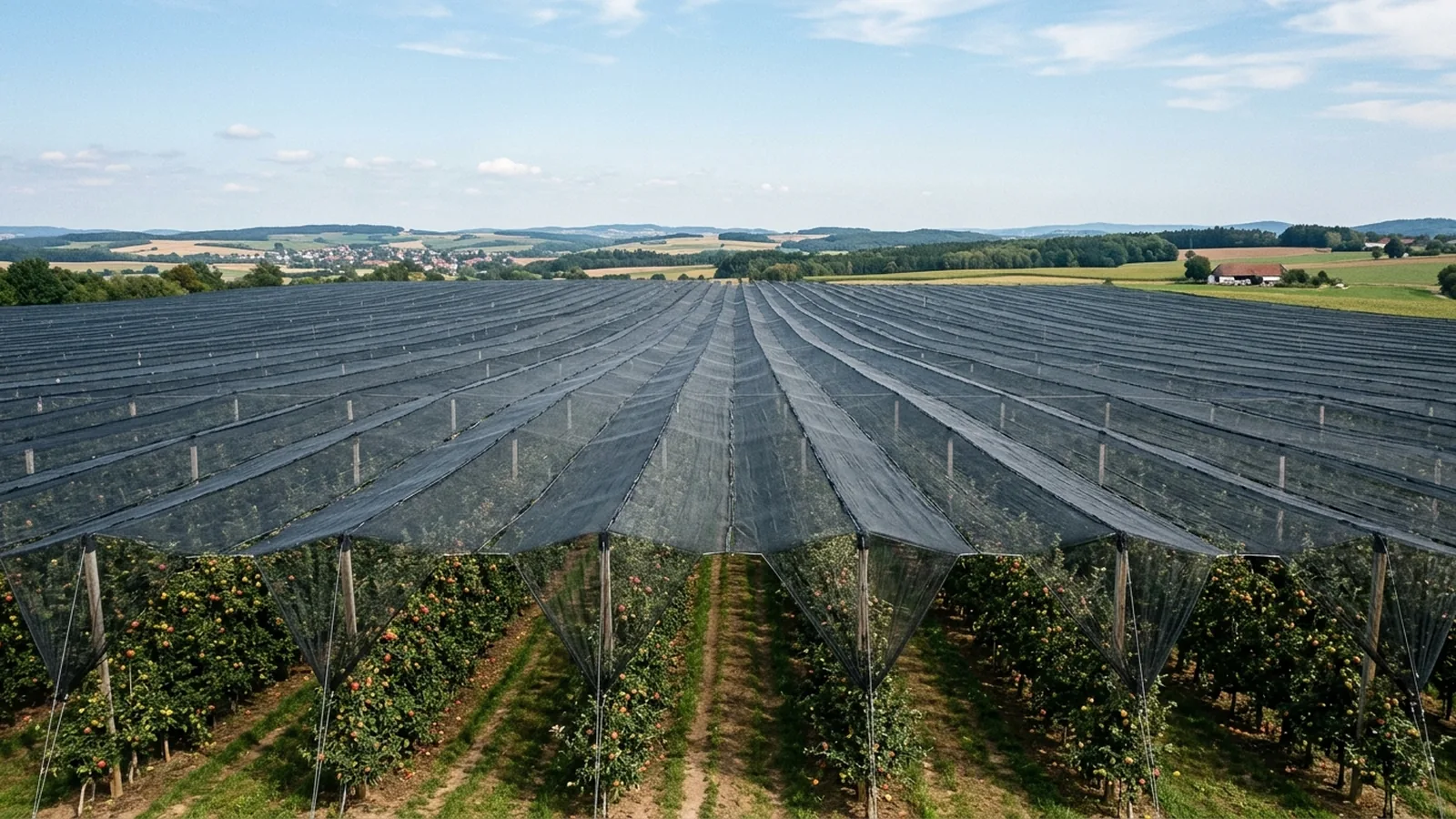
Hail netting is not installed in the air by optimism, and the support structure matters as much as the fabric hung from it. That sounds obvious enough to skip, which is presumably why so many RFQs still open with “please quote hail netting, 10 hectares” and nothing else, and why the quote that comes back carries a price to two decimal places built on a dozen assumptions about post spacing, cable layout and attachment that nobody wrote down and nobody will remember at installation.
In short
A hail netting quote is only as good as the structure context behind it. Before asking for a price, collect block dimensions, row and post spacing, cable layout, structure type, attachment method and whether the net must be removable. Mark unknowns as unknown: area alone produces a price full of assumptions, not a comparable quote.
Why the structure changes the quote
For orchard hail protection, the net is only one part of the system. The support structure influences:
- the roll width that makes sense
- the fixing method
- the reinforcement required on edges
- the amount of overlap or joining
- the load the system must tolerate
- the installation labor
- how the net opens, closes or stays tensioned
Two growers can ask for the same area of hail netting and need different products because their structures are different.
The structure checklist
Before asking for a quote, collect these details:
- orchard block length and width
- row spacing and tree spacing
- post height and post spacing
- cable direction and spacing
- whether the system is flat, pitched or tunnel-style
- anchor points and border rows
- how the net will be attached
- whether the net must be removable or permanent
- expected roll width preference
- whether accessories are needed
If you do not know all of this, that is normal, and it is not a reason to delay the enquiry. Mark the unknown items as unknown, because a quote written against three declared gaps can be revised in one exchange when the gaps close, while a quote written against three silent guesses looks finished and has to be unpicked later. “Not sure yet” costs nothing and pretending the system is defined costs a revision cycle.
The Roll Layout Planner can help translate block dimensions and roll widths into a first layout. It is not a structural design tool, but it makes the conversation much more concrete.
The most expensive missing detail
The detail most likely to create a surprise is attachment. If the quote assumes the net simply goes over the cables while the real structure needs reinforced edges, clips, ropes, sewn seams or special handling at the border rows, the final cost moves, and it moves after the price has been agreed and the season has started, which is the worst moment for a number to change. Ask the supplier:
- what edge finish is assumed?
- what roll width is assumed?
- are joins included or only net material?
- are accessories included?
- what wind and load assumptions are excluded?
A serious supplier separates product specification from engineering responsibility, and a buyer hearing that for the first time often reads it as a supplier backing away from the job. It is the opposite: the fabric can be committed to in writing because it is measurable, while the loads on your posts depend on your site, and anyone willing to guarantee both from a distance is guaranteeing one of them without having looked.
Research context
Extension guidance on hail netting usually discusses netting as part of an orchard system. University of Minnesota Extension, for example, frames hail netting around orchard management, installation considerations and crop outcomes, not only around material purchase.
Reference:
- University of Minnesota Extension: Hail netting for apple orchards
Buyer takeaway
Do not send a hail netting RFQ with area only. Send the structure context too.
The minimum useful RFQ is: crop, block dimensions, row spacing, structure type, preferred color, roll width, UV expectation and attachment method. Without those, you are comparing assumptions, not quotes.
Frequently asked questions
Why does the support structure change a hail netting quote?
The structure influences the roll width that makes sense, the fixing method, the edge reinforcement, the amount of overlap or joining, the load the system must tolerate, the installation labour and how the net stays tensioned. Two growers can ask for the same area and need different products.
What is the most expensive missing detail in a hail netting RFQ?
Attachment. If the quote assumes simple attachment and the real structure needs reinforced edges, clips, ropes, seams or special handling, the final cost changes.
What if I do not know all the structure details yet?
That is normal. Mark the unknown items clearly: "not sure yet" is better than pretending the system is defined.
What is the minimum useful hail netting RFQ?
Crop, block dimensions, row spacing, structure type, preferred color, roll width, UV expectation and attachment method. Without those, you are comparing assumptions, not quotes.