How to choose the right agricultural netting
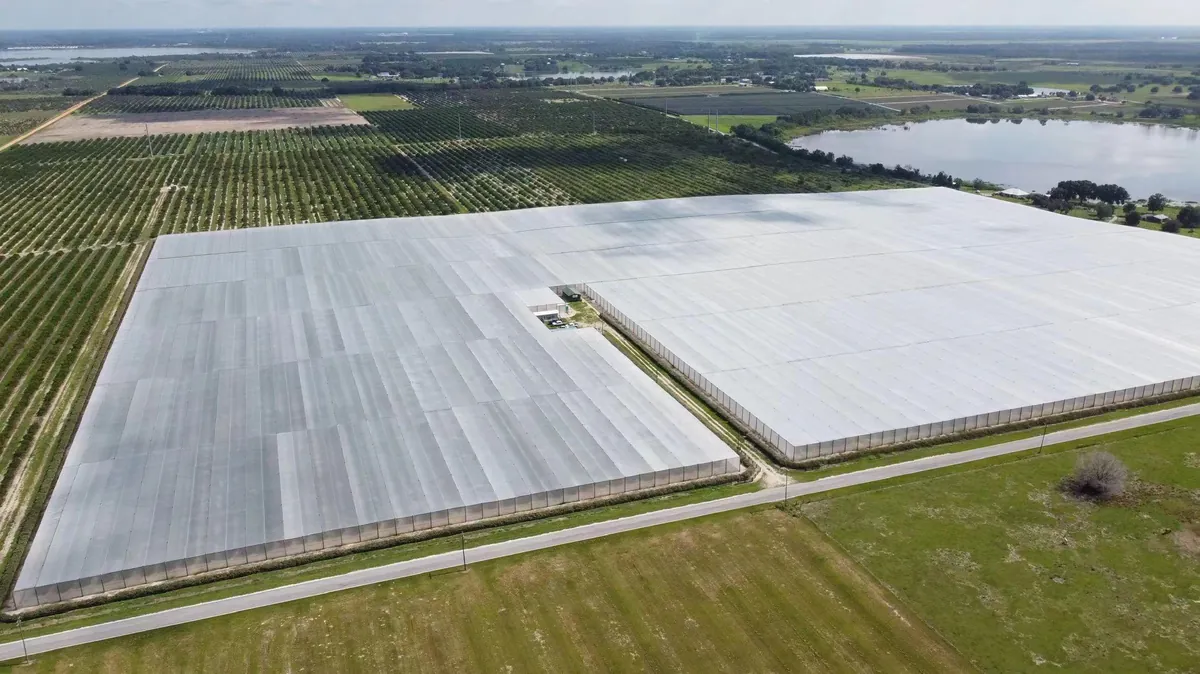
In short
- Insect netting: match the mesh aperture to the pest you need to keep out. Finer mesh stops smaller insects but reduces airflow.
- Shade netting: pick the shade percentage by crop and climate, roughly 30 to 50 percent for most vegetables.
- Anti-hail netting: knitted HDPE mesh that stops hail while letting light, air and rain through.
- Always confirm UV treatment, weight (gsm), color, width and length for your structure.
Netting is one of the simplest, most cost-effective ways to protect a crop: it keeps pests out, softens sun and heat, and shields fruit from hail, all without chemicals. The catch is that "netting" covers several very different products. This guide walks through the main types and how to specify the right one, so you can brief a supplier with confidence.
1. Insect netting: the mesh is everything
Insect netting is a woven HDPE barrier that stops flying pests from reaching your plants. The key decision is the mesh: the finer it is, the smaller the insect it will exclude, but the more it restricts airflow and can raise temperature and humidity under cover.
| Target pest | Typical mesh guidance |
|---|---|
| Aphids, leaf miners | Around 32 mesh and finer |
| Whiteflies | Around 40 to 50 mesh |
| Thrips (smallest common pest) | Around 50 mesh and finer |
For specifications, most insect nets are 100 percent virgin HDPE with UV treatment, from roughly 30 to 150 gsm, in widths of 1 to 10 m, some listed up to 100 m.
2. Shade netting: match the percentage to the crop
Shade netting controls sunlight and heat. It is rated by shade percentage, and the right level depends on the crop and how hot your season gets.
| Crop or use | Suggested shade rate |
|---|---|
| Tomatoes, peppers (heat-loving) | 30 to 40 percent |
| Most vegetables | 30 to 50 percent |
| Lettuce, leafy greens (sensitive) | 40 to 60 percent |
| Nursery seedlings, delicate plants | 60 to 90 percent |
| People, car parks, livestock | 80 to 90 percent |
These ranges are a starting point; published recommendations vary and local climate matters, so it is worth testing for your own conditions. Also decide between UV-treated netting (longer life, roughly 4 to 5 years) and non-UV (around 2 to 3 years), and pick a color: black and green are the most common.
3. Anti-hail netting
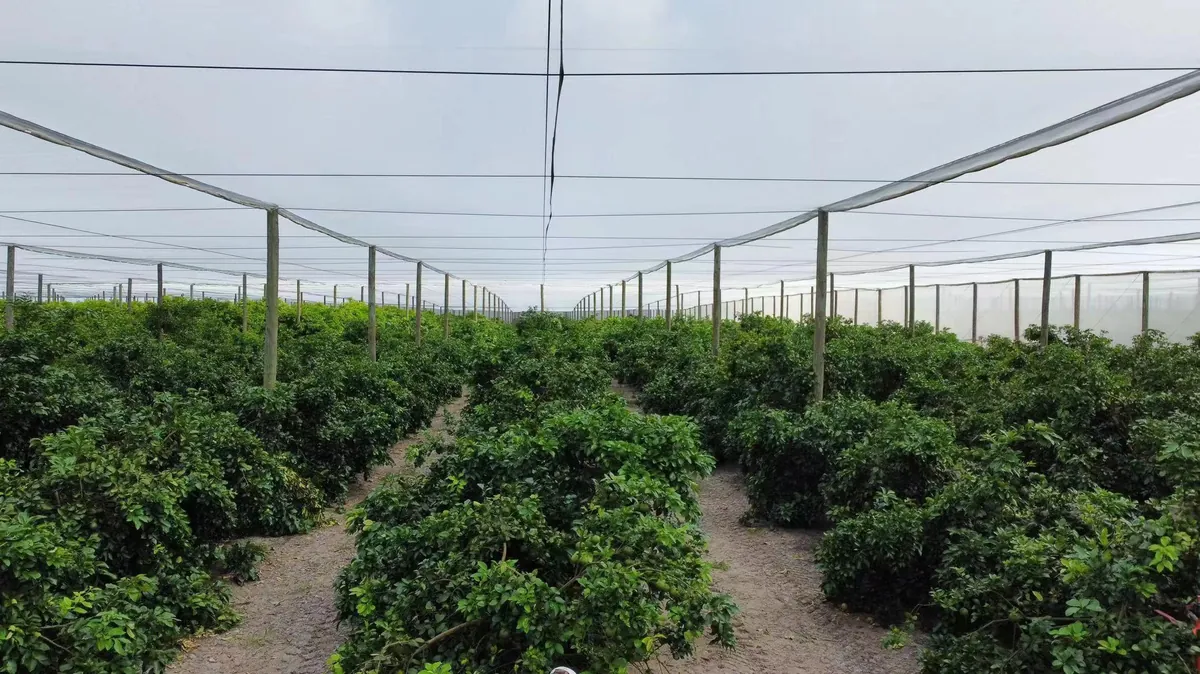
Anti-hail netting is a knitted HDPE mesh installed above orchards and vineyards. It absorbs the impact of hailstones before they reach fruit and foliage, while still letting light and rain through. Documented openings are 4×4 mm and 7×7 mm, or 8 to 50 mm in the printed catalog, at weights of roughly 45 to 100 gsm, in widths up to 10 m, always UV treated for multi-season use.
4. Mesh bags
For packing and transport, PP leno mesh bags keep produce such as onions, potatoes and garlic ventilated, which helps reduce spoilage. They come in a range of sizes, colors and weaves.
5. Plant support and trellis netting
Plant support netting keeps climbing crops such as beans, peas and cucumbers upright, which improves airflow and makes harvest easier. Choose a larger square aperture for vigorous climbers and a finer support pattern for lighter vines, in widths and roll lengths matched to your rows.
6. Bird protection netting
Bird protection netting shields fruit and crops from bird damage in orchards, vineyards and berry fields, while staying light and reusable across seasons. The right aperture depends on the target species and whether you need full exclusion or deterrence.
7. Harvest collection netting
Harvest collection netting is spread under trees to catch olives and orchard fruit during collection, then moved along the rows. Weight and roll width depend on the fruit and the shaking method: heavier nets suit mechanical harvesting, lighter nets are easier to move by hand.
How to request a quote
To get an accurate price quickly, tell us: the product type, the quantity (in square meters or rolls), the dimensions (width by length), the color, and the destination country. The more precise the brief, the faster the quote.
MeshAndNet.com / Qualitora LLC acts as a commercial sourcing contact and specification partner, not as the disclosed manufacturer. Production is handled by selected manufacturing partners, and the full catalog is available on request.
Tools to help you specify
These free tools do the thinking with you, with stated assumptions and no invented prices:
- Netting coverage calculator: rows, greenhouse, fence line or flat area.
- Mesh size visualizer: see each aperture at scale against common pests.
- Product Finder: get a recommended starting spec for your use case.
- Hail netting ROI estimator: weigh protection against the crop value at risk.
- RFQ spec builder: build a complete specification and export it as a PDF.
- Roll layout planner: plan roll widths, joints and overlap.
Frequently asked questions
What mesh size stops thrips?
Thrips are among the smallest common pests, so a mesh of roughly 50 and finer is generally used. Because the real exclusion factor is the hole (aperture) size, confirm the aperture for your target pest rather than relying on the mesh number alone.
What shade percentage is best for tomatoes?
Heat-loving crops such as tomatoes and peppers usually do well with about 30 to 40 percent shade. Most vegetables sit in the 30 to 50 percent range. Test for your own climate.
What is the difference between UV and non-UV shade netting?
UV-stabilized netting lasts longer outdoors, roughly 4 to 5 years, while non-UV lasts around 2 to 3 years. For permanent installations, choose UV-treated.
Is there a minimum order quantity?
MOQs vary by product; shade netting, for example, typically starts from around 1,000 square meters. Send your requirement and we will confirm the MOQ and price.
Can I get custom sizes and colors?
Yes. Width, length, color and treatment can be customized. Send your specification and destination country and we will coordinate a quote.